






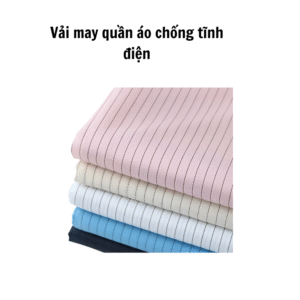

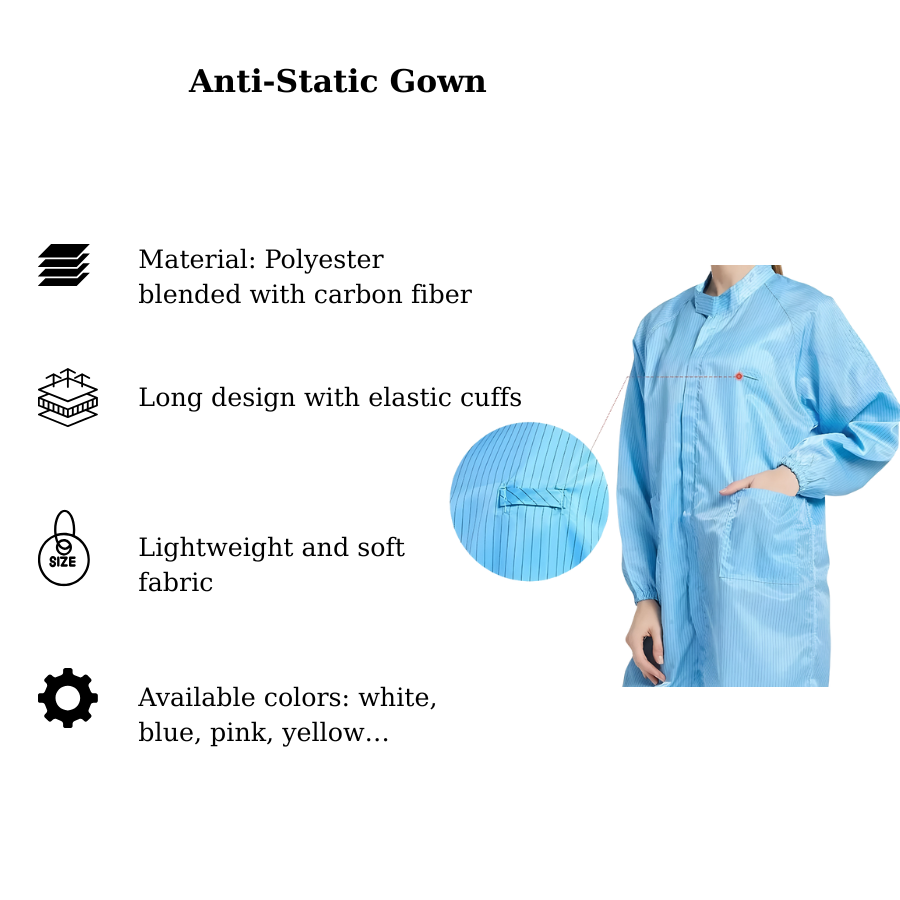
Anti-static fabric made from polyester blended with carbon fiber
Price: Contact Us
Description
General Introduction to Anti-Static Garment Fabrics
n many modern industries such as electronic component manufacturing, pharmaceuticals, and medical devices, the use of anti-static garment fabrics has become mandatory. This type of fabric is specially designed for cleanrooms, helping to prevent the risks of electrostatic discharge (ESD) that may cause component damage, cross-contamination, or disruption of production processes. With its ability to control and dissipate generated charges, this fabric contributes to maintaining stability in electrostatically sensitive environments, thereby enhancing both production efficiency and safety.
Product Description – Garment Fabric
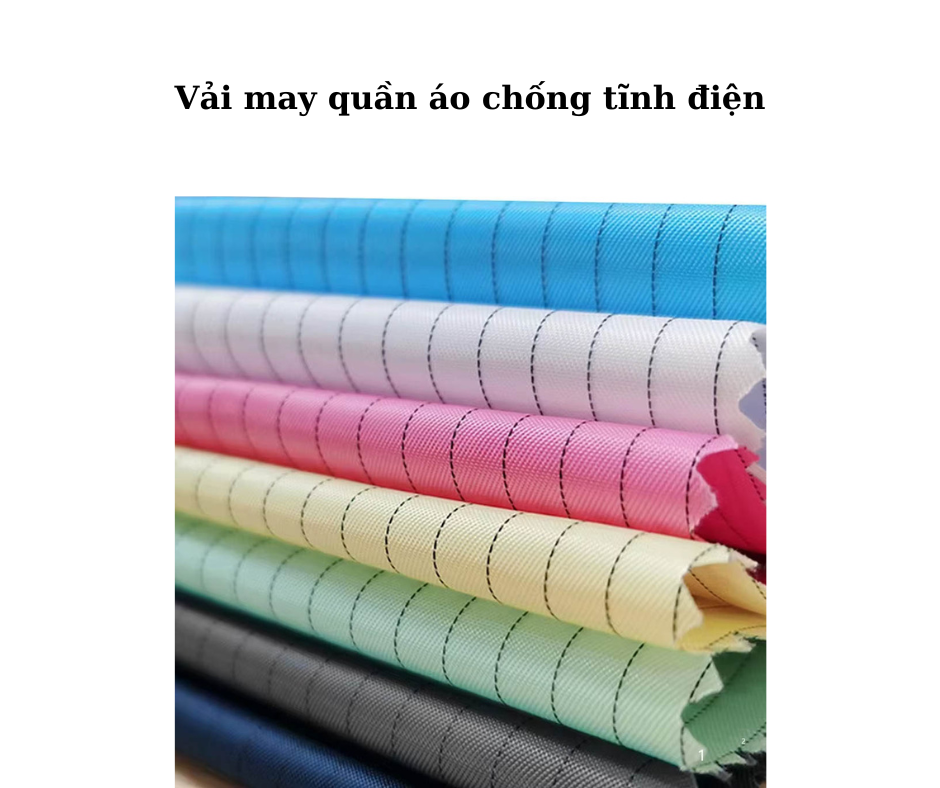
- Product Name Anti-Static Fabric for Cleanroom Garments
- Product Code: Model: ESD-FABRIC-01
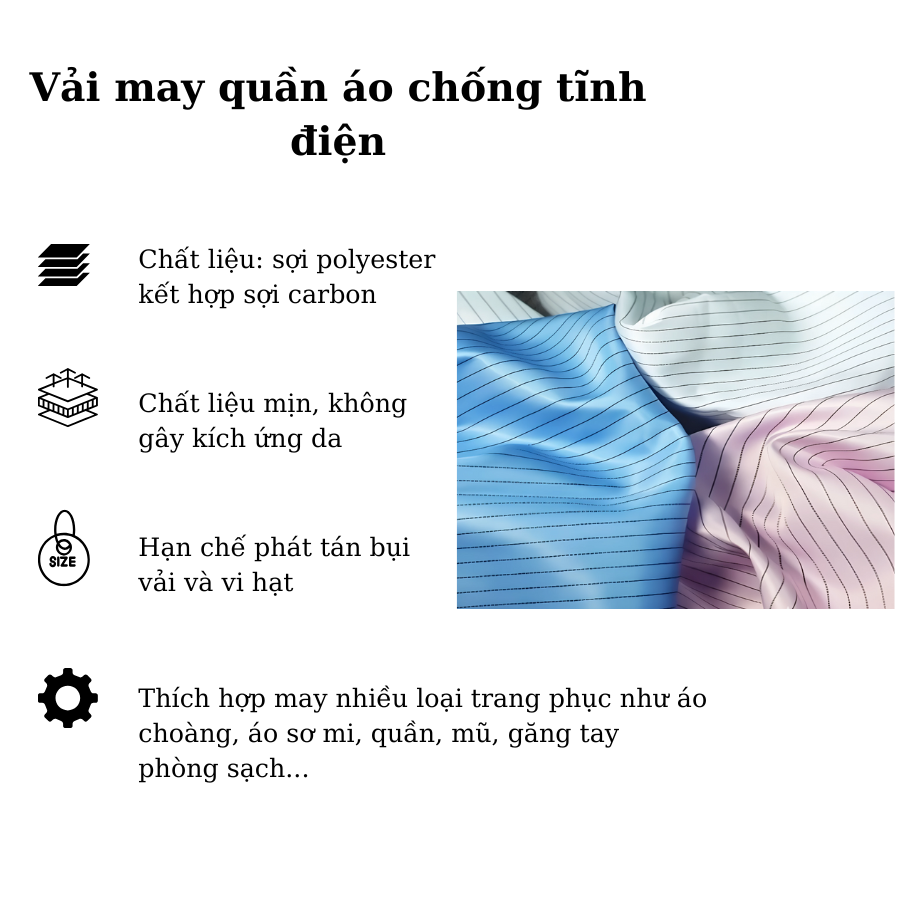
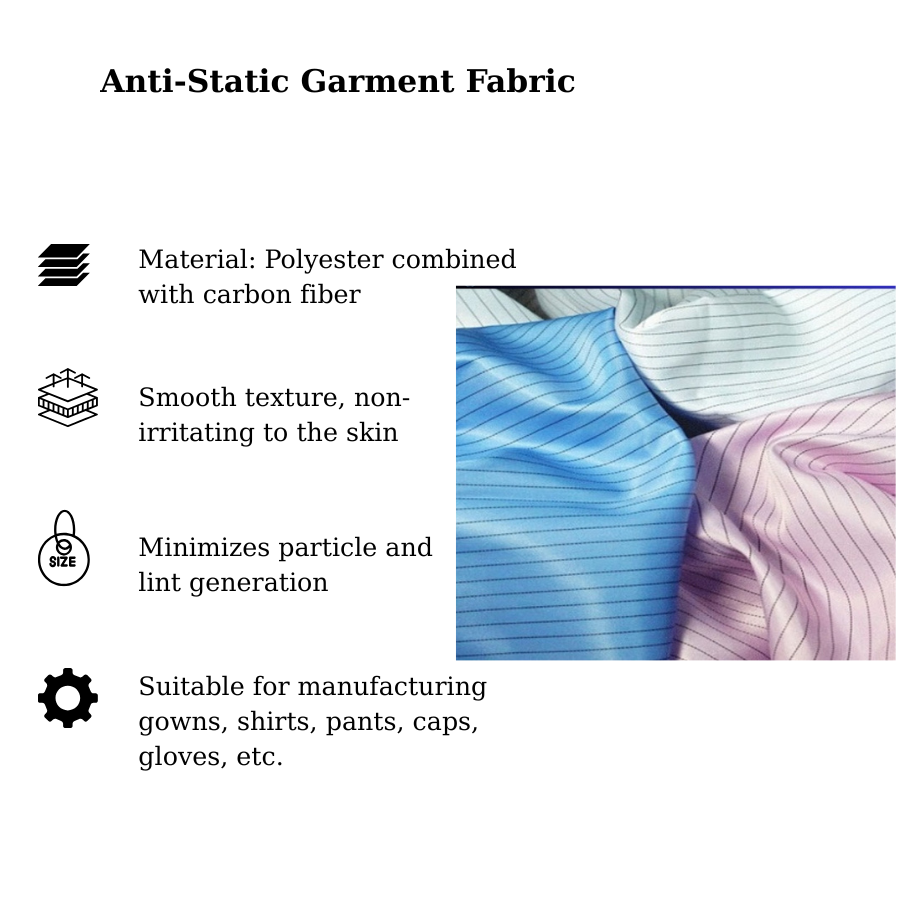
- Material: Polyester fabric blended with carbon filament
- Roll size: Width 1.5m × Length 100m/roll (or customized on request)
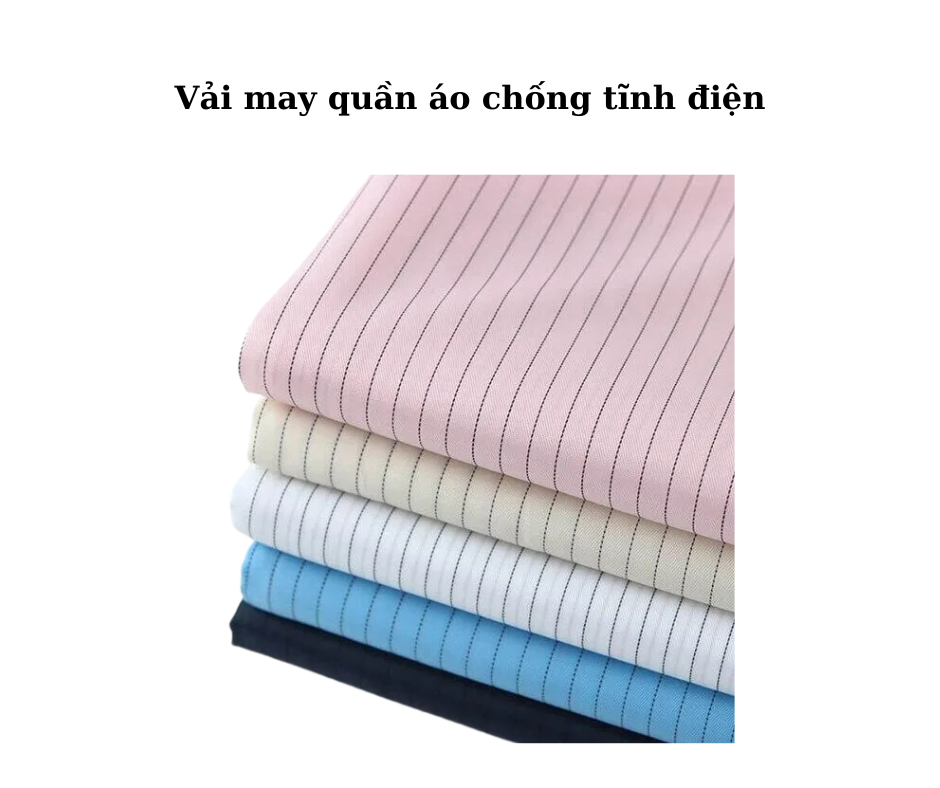
- Color: Blue, White, Gray, Pink, Light Yellow
- Weight: ~110 g/m²
- Surface resistance: Surface resistivity: 10^5 – 10^8 Ω
- Standard: ANSI/ESD S20.20, IEC 61340-5-1, ISO 14644-1
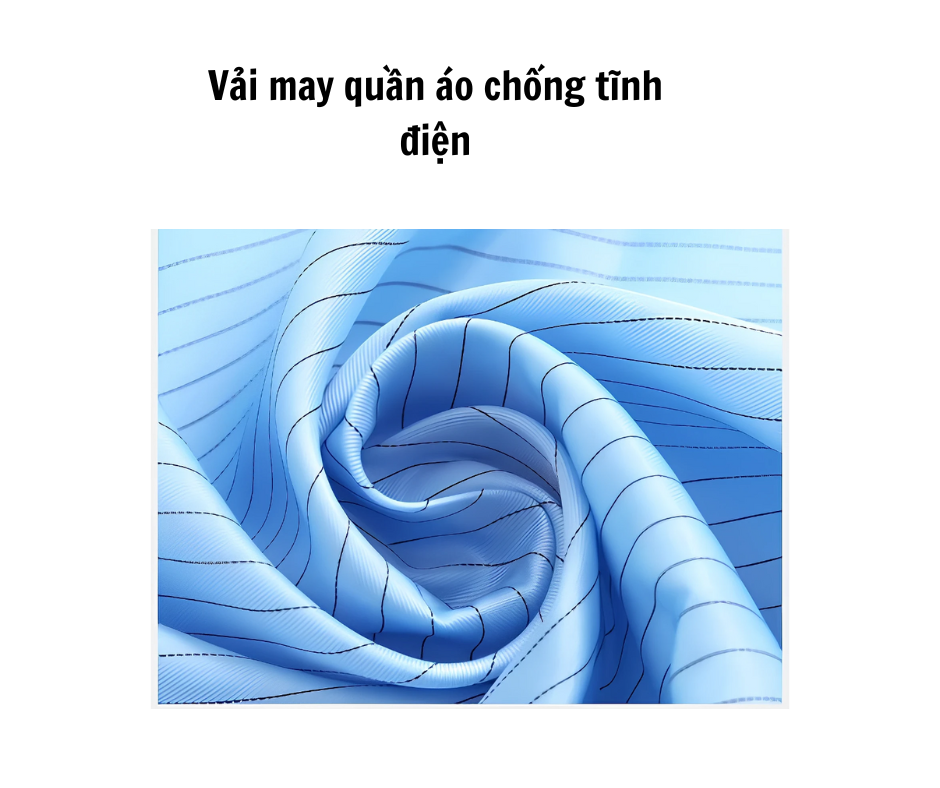
This fabric is specially designed with carbon filaments woven in a fine checkered or striped pattern, evenly distributed across the surface. Thanks to this structure, the fabric provides excellent conductivity and effective electrostatic control, meeting the strict requirements of environments with stringent ESD controls.
Diverse Applications of Garment Fabric
Suitable for a wide range of critical fields:
- Electronic component manufacturing rooms, SMT, semiconductors: Ensures no damage is caused by electrostatic discharge (ESD) to sensitive components.
- Pharmaceutical factories, medical device manufacturing, high-end cosmetics: Prevents cross-contamination and ensures manufacturing processes comply with GMP standards.
- Laboratories, R&D centers, labs, hospitals: Protects a clean, accurate, and stable research environment.
- EPA zones (Electrostatic Protected Areas): Ensures safe operation without being affected by electrostatic discharge.
- Electronics assembly workshops, production lines with electrostatic risk: Minimizes product defects, improving productivity and quality.
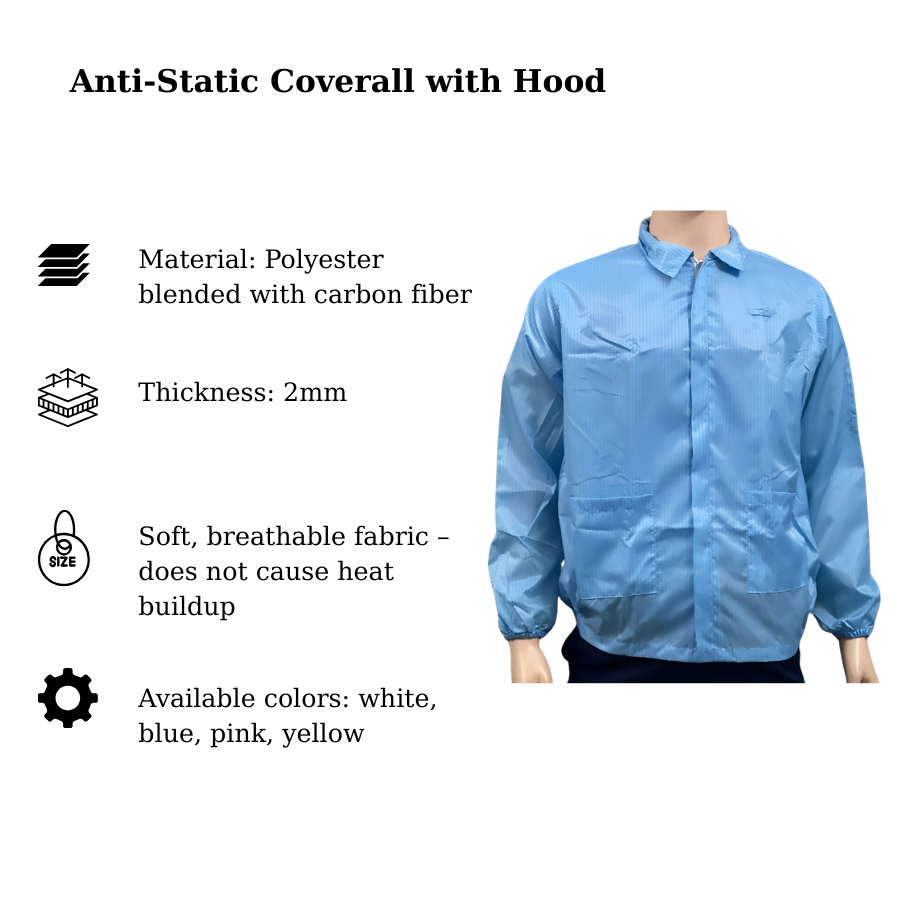
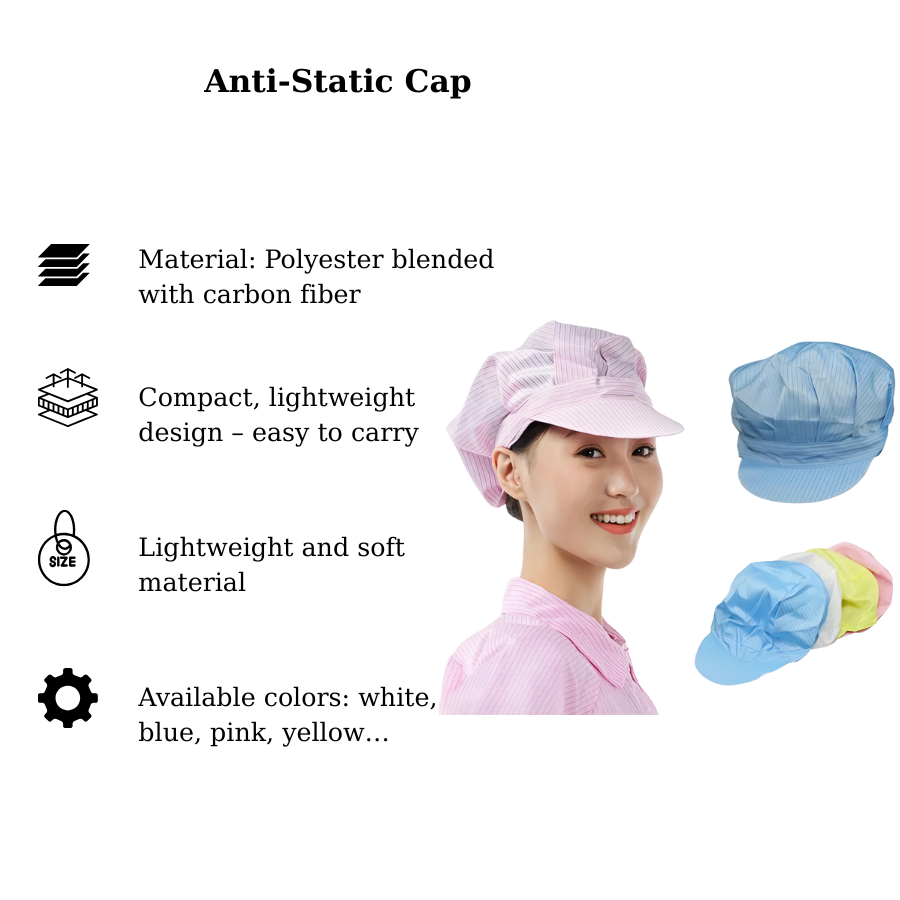
In major industrial zones such as Viet Yen (Bac Giang), Yen Phong (Bac Ninh), Thang Long Industrial Park (Hanoi), anti-static fabric has been and continues to be widely used for producing cleanroom uniforms, hoods, head covers, masks, and other protective accessories, contributing to building a professional and safe working environment.
Benefits of Anti-Static Garment Fabric
- Prevents the risk of component damage caused by static electricity: The fabric helps dissipate static charges, preventing sudden electrostatic discharge.
- Minimizes the risk of cross-contamination in medical and pharmaceutical production: Creates a clean environment, controlling bacteria and dust.
- Helps enterprises comply with ISO 14644, GMP, and ESD standards: Supports the process of inspection and evaluation of the quality management system.
- Enhances work efficiency, ensures occupational safety, and reduces economic losses caused by defective products: Anti-static fabric is a long-term and effective investment.
- Saves costs on equipment maintenance and production area cleaning: The fabric surface is dust-proof and lint-free, helping to minimize contamination.
Fabric Structure and Design
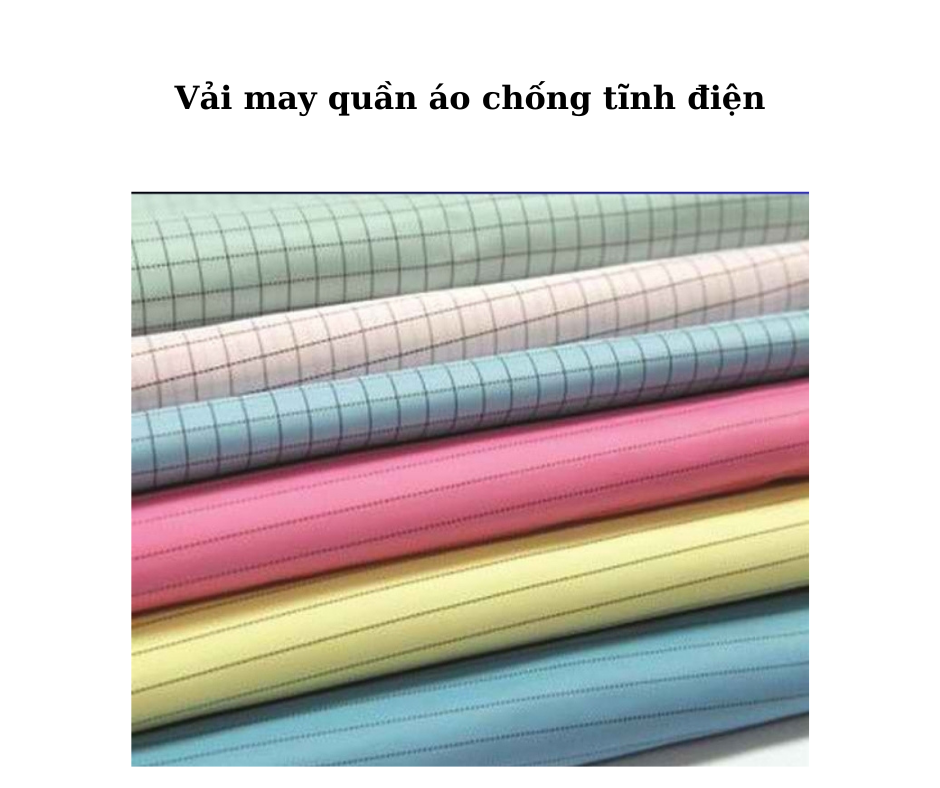
- Material: Polyester blended with carbon fibers, woven in a 5mm or 2.5mm checkered pattern.
- Surface: Smooth surface, easy to clean, and does not generate lint.
- Weaving method: Woven by shuttle or warp knitting, ensuring uniform fiber density.
- Key Features:
- Durable anti-static performance throughout the product’s lifecycle.
- Non-radiative and non-irritating to the skin.
- Easy to cut, easy to sew, and does not fray at the edges.
- Production options: Colors, thickness, weaving patterns, packaging methods, and lengths can be customized according to project requirements.
The fabric is packaged in rolls, protected with PE wrapping and standard cartons to ensure safety during transportation. The packaging process guarantees that the anti-static properties of the fabric remain unaffected.
Instructions for use and precautions
- Before sewing: The fabric should be stored in sealed bags to avoid exposure to dust and moisture.
- During sewing: Use cleanroom sewing machines and align the fabric in the correct direction to ensure conductivity is maintained.
- Storage after use: Store in a dry place, away from direct sunlight and corrosive chemicals.
- Special notes: Anti-static fabric is specifically designed for cleanrooms and EPA (Electrostatic Protected Areas) and should not be misused to avoid reducing its effectiveness.
Place to buy – reputable and high-quality address
If you are looking for anti-static garment fabric that meets strict standards in industrial production, cleanrooms, or electrostatic protected areas (EPA) – then Goma Food Machinery is the reliable choice.
We are committed to providing our customers with Comprehensive solution with genuine products, in-depth technical consulting, clear warranty, and the most competitive pricing in the market.
In addition, to serve customers in Northern Vietnam, customers can directly contact official authorized distribution partner:
AN BINH VINA TRADING & SERVICE CO., LTD
📍 AddressKha Ly Thuong Residential Group, Quang Minh Ward, Viet Yen Town, Bac Giang Province
📞 Hotline: 0866 732 555 (7:30 AM – 10:00 PM)
📧 Email: Email: anbinhvinaKL@gmail.com
Reviews (0)
Related products

Bạn vui lòng nhập đúng số điện thoại để chúng tôi sẽ gọi xác nhận đơn hàng trước khi giao hàng.
Ngoài ra bạn có thể đặt hàng trực tiếp qua các kênh sau:
AN BINH VINA TRADING & SERVICE CO., LTD
Trụ sở: TDP Khả Lý Thượng, P. Quảng Minh, TX Việt Yên, Tỉnh Bắc Giang.
Đà Nẵng: 95 Ngô Quyền, Thọ Quang, Sơn Trà, Đà Nẵng.
Hồ Chí Minh: 8/1A Ấp 1, Xã Bình Mỹ, Huyện Củ Chi, TP HCM.

Review Anti-static fabric made from polyester blended with carbon fiber